Tuesday, 1 September 2020

London Visits pre lockdown, Portobello and Ladbroke Estate memories … part 4 …


Next I was off on a memory lane journey … but the brain intervened so a little more history is added in …

Portobello Lane - c 1900

… and have noted that it is the final day of the virtual 2020 Notting Hill Festival  … good timing?!  Well other things happened so here we are a day later ... 


Also just to muddle me and you … I see the route of the Notting Hill Carnival now passes along ‘my street’ - when it's not virtual!


Arundel Gardens - I lived in a flat in about the middle
of the left terrace ... these trees are 'new'  ...
comparing the picture below the trees were probably
put in for the Millennium
Back in January this year I had to get to Portobello Road, Notting Hill tube station, to walk down to my flat where I lived for a few years in the 1970s – including the very hot summer of 1976: 


I remember it well … as I’ve just wilted here in 2020!


Depiction of the Hyde Park toll - further west ...
the area was distinctly in the hands of the highwayman


Mid 1700s – the Notting Hill turnpike toll-gate was established on the main Oxford to London road at the junction with Portobello Lane …


… a lane running north from the gravel pits of Kensington to the open country and manorial lands granted in the 11th century … it was through wooded pasture dotted with farming settlements …


… I saw this description on the speculative development of the Ladbroke Estate for most of the 1800s:


“it was like the Wild West, a tangled web of capitalism with developers going bankrupt, buying land off each other … swapping land parcels etc …”


Depiction of The Great Exhibition
opened by Queen Victoria in 1851
There was one saving grace – the Ladbroke Estate had been planned and enacted – which fortunately was never abandoned.  It appears that The Great Exhibition of 1851 ...


The Crystal Palace being opened
by Queen Victoria in 1851
... and the erection of the Crystal Palace in Hyde Park had encouraged the start of urban-growth westwards.


Notting Hill Hippodrome - the
area where the horses would be
stabled and looked after -
often in filthy conditons ... 
Early in the 17th century it was run down being occupied chiefly by labourers, horse-keepers and horse-feeders, with a shifting mass of sorry folk who had come down in the world – the degraded conditions of the late 1800s were ripe for cleaning up …


The eastern part (Portobello side) was developed, but the western part was really run down into the 1900s …


Portobello Lane to the right (east) of
the Hippodrome - 1841 - showing
no development at all ... within one hundred
years it was completely urbanised
In the late 1830s the hills of Notting Dale were transformed into a race course – hence the ultimate layout of the western part of the Ladbroke Estate following the curves and contours of the race course – known as the Hippodrome – more in the next post …


The race course failed … the heavy clay soil proved unsuitable for racing … but speculative land development was there for the taking, or losing, and retaking … as the needs of the local population dictated.


Booklet I've kept - a Brief Survey of the
origin, development administration of our
communal Garden within the Ladbroke Estate
In 1851 when the Estate was established, thirty communal gardens were to be maintained, and around which substantial Victorian houses were to be built.  Fifteen of the gardens now lie within the Ladbroke Estate Conservation Area … Arundel and Ladbroke Gardens being one of them …


You can just see he three bedroom
windows at the very top - that's
where I lived.
The houses after World War II were pretty grim (apparently!) and were mostly rooming houses … not lived in by one family.   Here a woman who lived in a 2nd floor bedsit in 1952 in the middle of the terrace – not quite my house – but near enough … describes the state of the area … I must have looked out over the plane tree she mentions.


Here’s her quote – pertinent to the times – twenty + years later when I arrived it had been upgraded into the 20th century – I’m glad to say!


“It was slummy, full of studenty types like me. I never went in the garden, but I loved the big plane tree I could see from my window. Inside the house was dark with dirty paintwork. I don’t remember a bathroom. My room had a gas ring and a basin. I wasn’t there much. The landlady insisted on opening the front door to make sure no unauthorised men were getting in”.


What I would describe as a 'card-house' more recently built
on the top of some flats in Eastbourne - not Notting Hill
My flat at the top – was an added floor … so I refer to it as my card-house flat – in those days there was no lift … a good walk up for the views – and yes it did have a bathroom and indoor toilet!


I spent four years there… one of which 1976: was as stinking hot as it has been recently … I was working three jobs … and playing squash – just assumed it would rain sometime and cool off … it didn’t and as far as I was concerned it was six months without any rain.  I went to Wimbledon one evening– sat in the sun I remember … and wilted …


This shows all the development that took place
in that 130 years from 1840 to as here in 1972: an
established series of roads, properties, gardens -
the hippodrome extends further west (left)
When I left there … I went off to South Africa … and had never explored the western parts of the Hippodrome area … it hadn’t been on my radar …


Interestingly further to the west the area now looked in better condition – the ups and downs of urban life …


The original Paddington Bear -
with a green hat (1972)
Another well-known resident was Paddington Bear – he resided with his owner Michael Bond and his wife at no 39 … the flat rent was about 25 shillings a week … they usually bought their food from local traders in Portobello market. 


Looking eastwards - with my flat
this time on the right; this photo taken
in 2010 - shows the young trees
The next post will cover the western parts – which didn’t go upmarket til recently – perhaps in the last thirty years …


It just amazes me how things change in quite a short time-frame … i.e. my lifetime!


Next we go west to look at piggeries, potteries, dovecotes and the Hippodrome …

Ian Visits Blog in Aug 2021 gives a little more information about the changes happening in this area in the 1800s - which I've referenced here in this post, and the next one ... 


Hilary Melton-Butcher
Positive Letters Inspirational Stories

Friday, 28 August 2020

We are the World Blogfest # 40: Kids Against Plastic …


These youngsters, Amy and Ella Meek, put together their campaign … promoting their ideas through schools, businesses, town councils, tourist guides … commencing back in the mid-2010s …

Ella and Amy Meet - c/o their website
They come from Devon in the West Country … a TEDX type event was organised by volunteers … so it is independent of the official TED – but still worth a (12 minute) listen to and look at …


We all know about the harms of plastic … I know I wrapped some things up in plastic bags – maybe 20 years ago – then they disintegrated into a zillion pieces – so much for the one piece bag ... I was horrified when it first happened.


Since then we’ve come to learn even more about the invasiveness of plastic into all areas of life – land to ocean … and yes, our air …


Amy and Ella have published a book ‘Be Plastic Clever’… that I reckon would be great to give as a gift … to a child, grandchild, or get into a library as a resource …


The contents can be scrolled through in Amazon – which I’m sure will encourage many to buy …


… they seem to have the issues covered – noting them in simple terms … yet have used scientific gurus to help them.

Ideas from their comprehensive website ...
thank you Amy and Ella!
Even going through the contents page and having a quick squizz I found some amazing bits of information I’d no great idea about …


They’ve teamed up with some female sailors who have been carrying out ground-breaking research into how toxins in micro-plastics can affect our bodies … led by Plymouth University Marine Biologists …


I love the Gandhi quote they give us:

‘Earth provides enough to sustain every 
man’s need, but not every man’s greed.’  
Mahatma Gandhi (1869 – 1948)


So their tag lines are:

Become Plastic Clever … reduce our usage … make small adjustments to our everyday lives

It’s Smart to be Clever … think forward …

Continue helping our family, friends, community and through them reach our leaders to encourage them to be visionary decision makers …

Recognise that Hope is a Powerful Force …


We need to help future generations have the best start in life … so let’s become plastic clever.


Here’s to Being Smart Adults … let us continue to remove plastic from our lives and help wildlife be there for us and our future generations.

We are the World Blogfest
In Darkness, Be Light


When I was in Canada I read an article about beeswax wraps - an alternative to plastic wrap - as Hels from Australia mentions in her comment she hadn't found an alternative ... and this might be something some of you'd be interested in:

https://www.naturebeewraps.ca/ 

Hilary Melton-Butcher
Positive Letters Inspirational Stories

Monday, 24 August 2020

Write … Edit … Publish … Bloghop / IWSG hop: Long Shadow …


The ochre hued landscape … echoed with bursting olive trees, dark sage green leaves dusted with the coloured sands, and then the deep green walnut groves that sprang from the valley sides …


… this was where they were headed to a tree house restaurant on the villa’s estate, overlooking the Tiber valley, set amongst the canopy of the walnut grove.


This treat was the highlight of their stay – something that had been on the cards for years – the pandemic stymied their first attempt … now five years on in 2025 – they were fulfilling their plans.


That Long Shadow had faded in recent years and now these friends were really going to enjoy the delights of Italian cuisine – one of the world’s best … and here they were ready to sample all the tasters offered …


These septuagenarians, friends since the early days, had sent their men folk off for the evening … while they were going to indulge themselves with wonderful memories interspersed, no doubt, with howls of laughter …


A walnut coming out of its green
sheath
This may well be their last overseas foray like this – who knows in this ‘new’ world of ours – but we’d survived … and the roaring twenties were theirs to luxuriate in as 20th century silver-surfers had found they could do …


However – of course – as they’d always excelled at cooking, were all considered gourmets, yet had gourmand interests – this was going to be the meal to be remembered … 


Umbrian countryside
 … the tree house could only take six – but perhaps they could tempt their husbands to bring them back again – so their beloveds could check the menu – and these twelve gourmands could all have another feast at the golden villa of the sun burnt Umbrian hills.


They’d taken the easy way out – to have the full taster menu – so all deliciousness could be tried and commented on …

 
Antipasti ideas ... 

… the table was booked for late afternoon – the sun would still be up, before dusk started to come down … plenty of time to eat and be merry.


Drinks came with olives, fresh walnuts, pickled walnuts, thin cheese and walnut crackers, fresh  breads, farm butter …


Walnut oil - with fresh walnuts

Antipasti … served with fresh figs, walnuts and melon;  a platter of chicory (green and pink), the leaves had juicy ripe pear strips draped in them, gorgonzola pieces spread over … then sprinkled with walnut oil …


Pasta with creamy walnut pesto …


Various fresh salads and salad tasters … served with walnut and garlic mayonnaise … ripe Italian tomatoes … orange salad sprinkled with walnut pieces and walnut oil;


Fish with nut stuffing
… the main course -  whole fish baked with walnut stuffing – sliced and served; 
a selection of spit roast meats with local vegetables …


A simple mouth cleansing dessert – lemon sorbet … and then the finale …


… a cheeseboard with apple and walnut chutney, fresh walnuts, other seasonal fruits and a variety of crackers …

Pickled walnuts

Local wines, spritzers, jugs of cold spring water were served … to finish and go with the coffee was a selection of “digestivo” … to temper the rich meal.


Now the sun was nearly set, the rays were spreading across the valley hills … the canopy of the walnut tree house had kept the heat of the evening sun away from them … while the long shadows were ending the day …


Walnut trees
An evening of delight – one that these aging ladies would remember for a long time - perhaps they could come back again before they were homeward bound – they just felt their husbands would feel left out at not being able to dine in the canopy of walnuts …


The foothills of Covid-19 were easing into the distance – but the long shadow of waiting for my WEP post … is another story …

Take care – the idea for this Long Shadow came from spotting this wonderful Tree House restaurant on the treetop of a walnut forest … hence the walnut ideas (which I found elsewhere) …


Hilary Melton-Butcher
Positive Letters Inspirational Stories

Monday, 10 August 2020

London Visits pre-lockdown, Tate Modern … part 3 …


I’m not comfortable visiting south of the river … the development of the South Bank started when I was overseas, and then continued on after I returned settling in Eastbourne, and I’ve no idea where I am or what I’m doing – so had to do some exploration …  
 
Red Tear sculpted by
Emily Young


Red Tear - sculpted from Persian Onyx ... (onyx with iron oxide colouration)


Emily Young's 'Stillness Born of History II'

Onyx with Volcanic Pyroclastic Breccia  
(produced by volcanic explosion)


… but I wanted to see the Emily Young sculptured heads  at Neo Bankside – ‘Stillness Born of History II’ – where geological time is charted in the marble that’s been used for the sculpture … 


(Breccia - Italian for loose rock fragments ... bonded on volcanic explosion)


Rudra - by Emly Young
(Purbeck Freestone (stone taken from limestone beds found
in Dorset England.)
... asking us to think about deep time … the geological cretaceous period that the metamorphosed limestone was laid down (145 million to  66 million years ago) forming part of earth’s crust today.

Purbeck Marble has been mined since Roman times, and used as a decorative building stone, though the industry is no longer active.  Purbeck stone is still used … and may have been used as far back as the Bronze Age – based on workings in Sussex).


Steve McQueen with his 2014 Oscar

Next I went inside to look at the exhibits presented by Steve McQueen – who has directed four feature films, including the Academy Award-winning 12 Years A Slave.


Here I was lost … he also had a simultaneous exhibition at Tate Britain, which I do feel able to comment on … so I will research further to post at that stage of this journey … I felt ashamed to leave and not spend time … but my day was rushed.


My photo ... looking down on this
amazing sculpture


However I did spot, couldn’t fail to – actually, a monumental sculpture, only 13 metres high (43 feet!) commissioned for the huge main Turbine Hall, with a gallery height of 99 metres (235 feet) …


I doctored this one I copied from an
article - and haven't done it or myself
any justice ... can you see the water
fountaining out from her neck area


… I had no idea what it was or was meant to be … however as luck would have it I came across the details about six weeks later – and it’s really interesting: an afterthought bonus for me/you to find out about.


The sculpture, Fons Americanus, by the American artist Kara Walker … is an uncomfortable take on the Victoria Memorial, that fronts Buckingham Palace.


Victoria Memorial in front of Buckingham Palace


Interestingly the installation was in place in October 2019 – this is because it represents a more painful parallel to our past … yet by not attempting to eradicate that, it presents an inviting open door into the world of today … good will can come through these challenging historical times.


Winslow Homer's 
The Gulf Stream (1899)

I’ll link to some more information on it – Fons Americanus … is, for me, an interesting artistic find – to be explored more, to learn too …


It seems you like the extra information via the links – and, of course, I like having them … as good referrals in the future …


Emily Young's sculptures - my #WATWB post - being sunk into the Tuscan Sea to protect the fishing grounds ... 

Emily Young's website ... wonderful sculptured heads to see - including those at Neo Bankside


Kara Walker's Fons Americanus page c/o Tate Modern

Kara Walker references Winslow Homer's 1899 painting 'The Gulf Stream' ... and the Tate article is really informative ... 

Hilary Melton-Butcher
Positive Letters Inspirational Stories

Tuesday, 4 August 2020

London Visits, pre lockdown, Cartography and Illustrations at Matches Fashion … part 2 ...


I’m sure you know me well enough to know that fashion is not my scene … 
Carlos Place


... thank goodness you all say, so do I!


… but geology and maps are …

London 1831
 ... going to Grosvenor Square (Carlos Place runs off it) and seeing where I used to work – near to the old American Embassy, before it moved south of the river, was tempting …


1970 - Near side of the Moon by
US Geological Survey
… but the draw was the antiquarian scientific illustrations, natural history prints and maps on display at The Fashion House in Carlos Place, which I thought would be interesting … just not to become a fashion icon!


A waiting or viewing room

When I walked in … I was directed towards their private viewing room … uh uh ... 


Cafe area looking out over rooves
I backed away laughing and saying I only wanted to see the antiquarian exhibits – they were very polite and really helpful …


Much mirrored toilet - and thus at least two of me
… I was taken to the top and allowed to wander around and down looking at the prints and peering around … an interesting experience.


Individual prints were to
be found ... a boa
constrictor

So a few images and some links … I could have spent (a lot) longer there … and could, but didn’t, have lunch – as they have a café on the top floor overlooking the local rooves …


Described as a monumental map of New York (1874)
by Egbert Ludovico Viele (1825 - 1902) - he became the
Chief Engineer of Central Park; his main claim to fame was
this map ... which took two decades of intensive research
 ... and is still consulted for developments in the city!
… it was elegantly furnished, but there were no clients … which was a pity – as that would have been interesting though I probably wouldn't have had a free rein.


Andreas Cellarius' 17th century chart explaining
the phases of the moon
My photos aren’t great - the lighting wasn’t easy … but there’s some highly recommended links – should you wish to find out more.


The Map House – exquisite art works: see what I saw here …

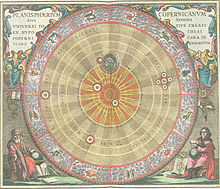
Illustrations of the Copernican
System - see Wiki

Cartographic  ‘heavenly’ charts by Andreas Cellarius (1596 - 1665) dating to 1661;


Brodtmann's majestic beasts


Antique Lithographs of majestic tigers, jaguars and lions by Karl Joseph Brodtmann (1787 – 1862). 

Swiss artist, lithographer, as well as printmaker, publisher and bookseller.


Ernst Haeckel's Sea Anemones
c/o Wiki
Ernst Haeckl (1834 – 1919)– the German scientist, philosopher and artist – he was one of the most prominent men of the Belle Epoque (1870 – 1914) – championing both early Evolutionary Theory and profoundly influencing the Art Nouveau style.


Tulips by Robert Thornton - to be found in his
"The Temple of Flora" illustrated botanical works


Robert John Thornton (1768 – 1837) – English physician and botanical writer  - prints from “The Temple of Flora” …


James Sowerby by Heaphy (1816)
James Sowerby (1757 – 1822) – English naturalist, illustrator and mineralogist – his studies quickly became the main source of information at the time, when geology and mineralogy were extremely fashionable.


Geological Chart by Yaggy
All the geological rock periods are named
Levi Walter Yaggy (1848 – 1912):  American illustrator and innovative publisher of educational maps and charts, explaining the Earth’s physical features. 


Nature in Descending order

These are amazing … as the ‘This is Colossal.com’ site shows them in their full glory …


Sowerby's miniatures - hand coloured copper-
engravings from his British Mineralogy (1817)


There were other cartographic works on show … from the 1600s to the 20th century … maps, the moon, city plans – eg London, New York …


A map of the world
on the top landing


The exhibits came from The Map House, established in Beauchamp Place, Kensington … while their site also has an incredible range of works available for sale and to see: I recommend a digital visit.


This links to some of the pieces that were on display at Carlos Place … and is definitely worth looking at …

Thornton's Lilies - also in
"The Temple of Flora"

National Geographic has a site on Yaggy too ...


I really could have spent ages here ... but my schedule was 'pretty tight' ... I'd be off to the South Bank and Tate Modern once I'd left Carlos Place.


I hope you'll get a chance to look at the links - absolutely staggering what could be produced in earlier centuries ... and how much they could piece together ... we're lucky we can 'see' it so easily today.


Hilary Melton-Butcher
Positive Letters Inspirational Stories