Showing posts with label Geology. Show all posts

Monday, 13 July 2026

Crumbly Cliffs … hot, hot, hot …


Life ticks on … I'm still no further forward, yet slowly perhaps things are coming together health wise … debilitating, but not serious thankfully ...


It really was like this - a boiling,
hot day at Birling Gap, E Sx
A friend is off to the Cotswolds to live and I'll miss her – like-minded souls are few and far between … but she's just exchanged house contracts … so time is running out.


The coombe rock is much
softer than the chalk
eroding at a faster rate;
The cliffs are receding at
an average of 70 cm (over
two feet!!) per year


We went off to look at the Crumbly Cliffs in the heat of the day … but with all the tourists' sightseeing (good for economy, I know) not good for their non-awareness of us locals being around … who theoretically know what we're doing and expect!


Electric Ice-Cream van -
we found amusing ... but decided
a proper lunch was better

We headed back into Eastbourne for a peaceful lunch at an air-conditioned hotel, where I'd been the night before for an European Movement dinner – which I've mentioned in the past.


BHASVIC building located in
the Brighton and Hove area

Our speakers at the dinner were four of the eighteen students from Brighton, Hove & Sussex Sixth Form College who've been joining us for about six months – the spoke on:


- Brexit's impact on British democracy

- The Influence of Political Belief (systems) on young people

- The impact of Social Media on the European Union

Is Extremism killing the European Union?


This is a book - of the Brexiteers' quotes
put up on billboards around the country:
such an appropriate commentary 


We'd also asked other local schools if they'd like to participate … we had one taker (it is near the end of the school year – so perhaps understandable) … Willingdon School, a suburb of Eastbourne, sent 7 fifteen year olds with a very supportive teacher – they also engaged …


Crumbly cliffs with disappearing
cottages as and when 
It was such a fun and successful evening – that we're going to integrate students into our set-up – seeing as we've been going as an independent branch organisation over 50 years …


This is where they estimate
the coastline will be in 2038
(not long to go)

Now tennis is essentially over I can get back to 'normal', despite this I've another blip added in to the health aspects – age is a nuisance! Somehow I have to get back to blogging fairly regularly … so onwards and upwards: I hope …


This is the other side of the
entrance steps - not far ...
yet here we might be in 2043


Thanks for all your support – life will continue and the crumbly cliffs will keep crumbling, particularly after this extremely hot, dry year – what lies ahead … we do not know … but the crumble of so much will keep on!!


Brighton, Hove & Sussex Sixth Form College link

Wikipedia entry for BHASVIC ....

Willingdon School ... 


Hilary Melton-Butcher

Positive Letters Inspirational Stories

Monday, 23 March 2026

Crinoids … St Cuthbert Beads …


Stepping on eggshells … or walking on the beach with sharp, stony pebbles … both would make us jump around trying to find a more comfortable place from which to enjoy the seashore …


"So-called
St Cuthbert's beads"
I remember a holiday I had with my father years ago up on the Northumberland coast, when we visited the tidal Holy Island of Lindisfarne – an important centre of Celtic Christianity, including St Cuthbert (c 634 – 687AD), and later the Venerable Bede (c 672 - 735AD) …


Falsies from years ago!

I don't know how many have seen the fossilised false teeth set that hit the airwaves recently … actually some crinoids ossified as the planet evolved about half a billion years ago … entitled the 'smiling fossil' see link below


Lindisfarne - Holy Island
Crinoids, marine invertebrates, can still appear … but these fossilised ones tend to be found from the Triassic era (c 250 million years ago to 200 million years ago) ...


Crinoid Stem

I realised the crinoid find … false teeth from the triassic era … rather quaint - which gave me, and continues to give me, a laugh …


Explanation of a Crinoid - via Lumen
Amazing what can be found millions of years later … protected in a layer of sediment the skeletal remains compacted, turn to rock …


One of the pinnules - before
the crinoids separate away

... the bones are dissolved by water seeping through the rock, while the minerals in the water replace the bone, leaving a rock replica of the original bone called a fossil …


As described within image
...then over geological time these replica bones become displaced leaving us with the so called “St Cuthbert's Beads' from the Jurassic era…


Triassic flora and fauna
Strange but true … false teeth idea and all?!


Happy Spring finally, though we're in for a few chilly days …


Smiling False Teeth fossil

Lumen - c/o Wiki

Crinoid - c/o Wiki

National History Museum - discover the triassic period


Hilary Melton-Butcher

Positive Letters Inspirational Stories

Thursday, 21 September 2023

The Cornish are a Nation …


This was not the intended post … that's coming … but this intrigued me … being a committed Cornishlady …

The three ancient
continental land masses


I must have been looking for something (understatement) but came across this Facebook post from the University of Plymouth … at the boundary of Cornwall and Devon …


it was subtitled: Cornwall – a different people, a different land! - though I wasn't born there (my mother's family is from St Ives) … this could so easily apply to me.


I've plagiarised/ summarised /messed with their 2019 FB post – but linked back so you can see the whole …


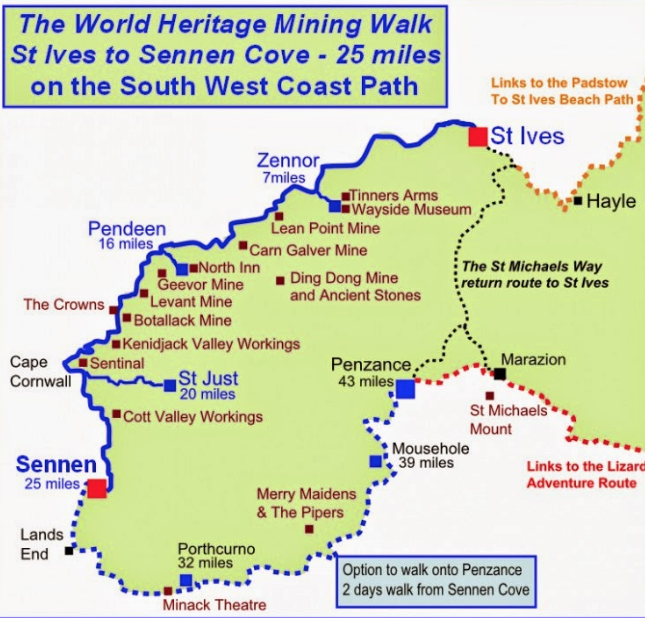
World Heritage Mining Walk
(Botallack is marked -
part of 'The Crown Mine' estate)

Geology has always fascinated me … and coming from the land of the tin mines, it makes sense – in fact my disastrous marriage was celebrated in a tin mine counting house at Botallack … the culinary celebration was very good – the rest: not so …


I wrote about Bewitching Breeches at Botallack for my 'B' post in the 2015 A-Z challenge 'Aspects of British Cornish.


Avalonia

The University of Plymouth believe that a third ancient continental land mass melded this Albion isle … as shown in the image posted above …


It's been known that Avalonia formed most of England, which then formed an attachment to Laurasia … part of the Laurentian land mass, which at one stage formed part of the ancient continent of Euramerica/Laurussia …


It always amazes me that these continental plates 'moved around' so much, and at one stage (long, long ago) we could have walked to north America …


Folded old red sandstone rock formation
at St Anne's, Wales

...the Old Red Sandstone is an assemblage of rocks in the North Atlantic region – which extends from Great Britain, Ireland and Norway across to Greenland and northern eastern Canada and the USA …


Another A – Z post on Aspects of British Coasts – the 'G' post: G is for Geology, Gneiss, Groynes, 'Grippers' … gives another view …


Geology of Great Britain (see Wiki)

I think I've probably almost ruined the idea about the world and its tectonic plates … but there is a link – to my next incredible story … colouring books from the 1600s – who'd have thought?!


Patience is a virtue … thanks for reading though …


The ancient Celtic tribes of southern
England (Dumnonii - Cornwall and Devon)


University of Plymouth Facebook post September 2019;

Avalonia – c/o Wikipedia

Laurasia – c/o Wikipedia


Hilary Melton-Butcher

Positive Letters Inspirational Stories

Thursday, 30 June 2022

Clunch - and its origins …


Clunch – this soft-stone building material used in Berwick Church … was created by the inundation of much of southern England, beginning 115 million years ago during the 'Cretaceous Period'.


Beachy Head, on the edge of Eastbourne ...
the Sussex Downs stretching westwards
towards Brighton and on ... 

At that stage in earth's history the sea covered most of Britain and Europe … it is estimated that 98 million years ago the sea level was more than 20 metres (60.6 feet) higher than it is today …


Cross Section of Wealden Down - showing
the wearing away of sands, Gault clay and
chalk of the Downs

it was a period with a relatively warm climate resulting in this high sea level, as well as numerous shallow inland seas.


Global distribution of coccolithosphores
in the oceans


The world was ice-free, forests extended to the poles … while different life forms waned and new ones appeared …


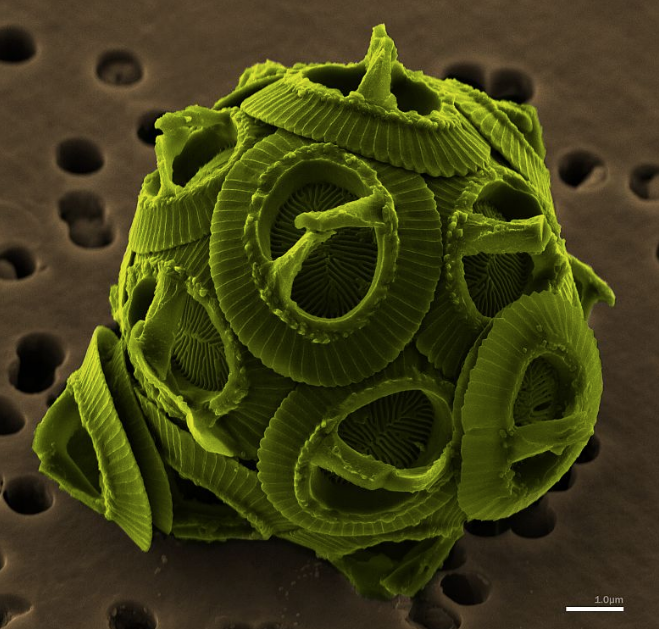
False-colour scanning electron micrograph of
Gephyrocapsa oceania, showing the coccoliths


and the extensive beds of chalk were laid down from the shells of minute marine invertebrates, principally coccoliths, found in calcium carbonate in the waters.


Examples of Four Invertebrates
Different Phyla are:  a Cnidarian;
an Arthropod; a Mollusk; and an Annelid
The Totternhoe stone was formed from the Grey Chalk sub-group – this period occurred between 98.5 million and 93.5 million years ago – and is recognised as a slightly stronger stone, than the fine dusty chalk we have here on the south coast, which is purer and thus more white.


Berwick Church from the east

So in warmer times many moons ago England's white cliffs of Dover, our Sussex Downs coastline were being created … and the term 'clunch' was established.


Post on Berwick Church and how the 'Clunch stone' has been used in the restoration ...


Hilary Melton-Butcher

Positive Letters Inspirational Stories

Friday, 10 June 2022

Clunch … a soft stone building material …


I'd never come across Totternhoe Clunch before … so I needed to find out exactly what it was …


Totternhoe Quarry

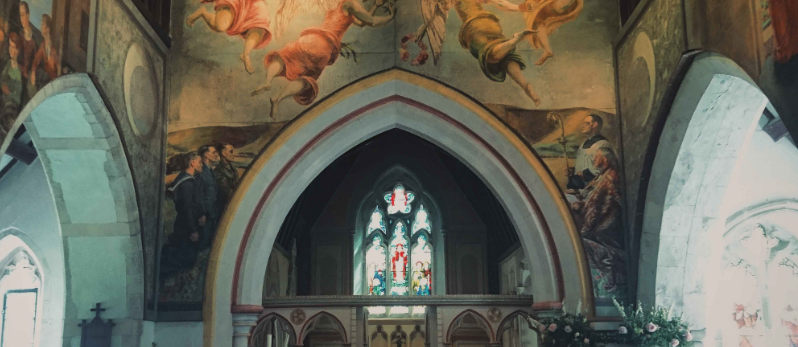
The connection came from Berwick Church, where we find the Bloomsbury Group murals … which have recently been repaired, conserved and restored to last for at least another 100+ years …


my WEP Narcissus post was a 'Hilary - creative by-product' of learning more about the restoration of these wall paintings …


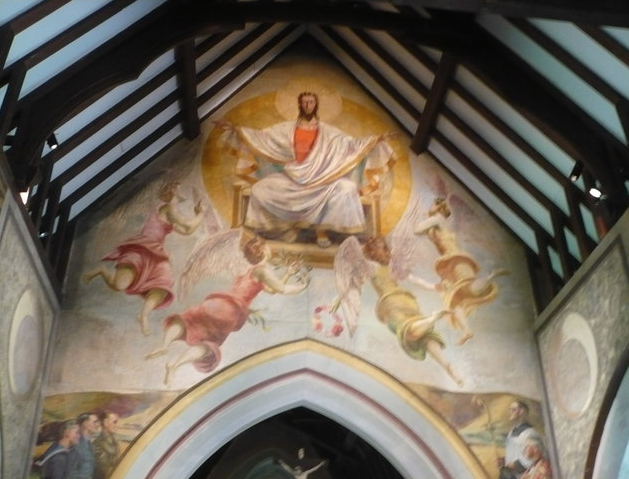
The Chancel - murals painted by the
Bloomsbury Group

the Bloomsbury Group included Virginia Woolf – who I think you might have heard about … her sister Vanessa Bell and other members lived nearby … hence the artistic connection ...


Berwick, East Sussex church

I have family connections in the area … and so am always interested to hear what's going on over at the Church.


The new porch being built

At the moment having restored, repaired and ensured the Church can 'survive in good order' well into the 22nd century … they are now building an outer porch, to form an air-lock between the interior of the church, and the great outdoors.


Berwick Church has applied for and been given money from the Heritage Lottery Fund – so the conservation and repair works need to conform to, and comply with, best practice …


Our iconic white cliffs - this area is very often
used in films, tv programmes and commercials

Along the south coast of England we have this geological band of chalk – as you'll know 'The White Cliffs of Dover', or here, near Eastbourne, … the iconic cottages above Cuckmere Haven …


Whether Clunch was excavated here in the last 2,000 years or so (it probably was – but flint-stone was more important) we'll never know … but the recorded Totternhoe Clunch is to be found just north-west of London …


Totternhoe Castle mound
(Norman period 11th century)

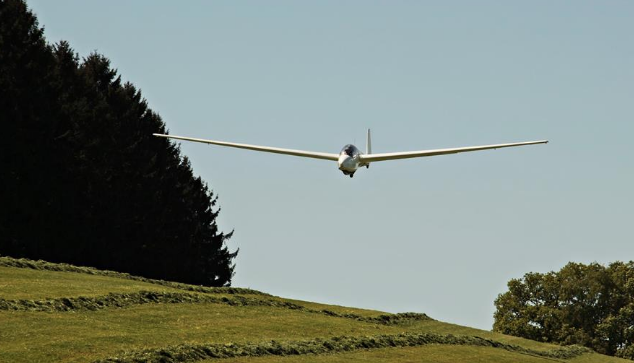
I looked at Totternhoe Castle mound and thought – that looks like Dunstable Downs – where I briefly took some gliding lessons – off those chalk downs – many, many moons ago – small connections of this world.


Gliding down to the runway

both the Romans and Normans used this soft limestone, as it's easier to work … in more recent times 1700s!! - it has been used in Woburn Abbey.


There's a really fascinating information site from Stone Specialist about the stone called 'Totternhoe Clunch' … amazing history about the area and 'clunch'


Woburn Abbey


The approved builders for Berwick Church, under the auspices of English Heritage, have sourced this particular stone as meeting the standards required.


Wider angle showing further mural artwork
by the Bloomsbury group - painted during WW2

I suspect that you'll be getting another post using the information I've gleaned from the Stone Specialist …


As described - the light green
depicts chalk.  Beachy Head
is very near where I live.
So as I've been rather engrossed in other subjects – here's a post to tide me over, til I need to write a letter for WEP next week (see the side bar) …

Life is interesting to put it mildly … and recently it has had its odd moments – even today I nearly got off the beaten path again …


So I'd better get on and introduce you to 'clunch' – a new word to me … but more fascinating to learn about its history and present day usage …


Looking across the South Downs at Lewes,
c/o John Wallace


Here's to Totternhoe Clunch! Have happy weekends …


There's an excellent book on the Bloomsbury group at the Church ....  “Even more may be gained, from Peter Blee’s scholarly, perceptive, and beautifully produced account of The Bloomsbury Group in Berwick Church.


Hilary Melton-Butcher

Positive Letters Inspirational Stories

Monday, 10 August 2020

London Visits pre-lockdown, Tate Modern … part 3 …


I’m not comfortable visiting south of the river … the development of the South Bank started when I was overseas, and then continued on after I returned settling in Eastbourne, and I’ve no idea where I am or what I’m doing – so had to do some exploration …  
 
Red Tear sculpted by
Emily Young


Red Tear - sculpted from Persian Onyx ... (onyx with iron oxide colouration)


Emily Young's 'Stillness Born of History II'

Onyx with Volcanic Pyroclastic Breccia  
(produced by volcanic explosion)


… but I wanted to see the Emily Young sculptured heads  at Neo Bankside – ‘Stillness Born of History II’ – where geological time is charted in the marble that’s been used for the sculpture … 


(Breccia - Italian for loose rock fragments ... bonded on volcanic explosion)


Rudra - by Emly Young
(Purbeck Freestone (stone taken from limestone beds found
in Dorset England.)
... asking us to think about deep time … the geological cretaceous period that the metamorphosed limestone was laid down (145 million to  66 million years ago) forming part of earth’s crust today.

Purbeck Marble has been mined since Roman times, and used as a decorative building stone, though the industry is no longer active.  Purbeck stone is still used … and may have been used as far back as the Bronze Age – based on workings in Sussex).


Steve McQueen with his 2014 Oscar

Next I went inside to look at the exhibits presented by Steve McQueen – who has directed four feature films, including the Academy Award-winning 12 Years A Slave.


Here I was lost … he also had a simultaneous exhibition at Tate Britain, which I do feel able to comment on … so I will research further to post at that stage of this journey … I felt ashamed to leave and not spend time … but my day was rushed.


My photo ... looking down on this
amazing sculpture


However I did spot, couldn’t fail to – actually, a monumental sculpture, only 13 metres high (43 feet!) commissioned for the huge main Turbine Hall, with a gallery height of 99 metres (235 feet) …


I doctored this one I copied from an
article - and haven't done it or myself
any justice ... can you see the water
fountaining out from her neck area


… I had no idea what it was or was meant to be … however as luck would have it I came across the details about six weeks later – and it’s really interesting: an afterthought bonus for me/you to find out about.


The sculpture, Fons Americanus, by the American artist Kara Walker … is an uncomfortable take on the Victoria Memorial, that fronts Buckingham Palace.


Victoria Memorial in front of Buckingham Palace


Interestingly the installation was in place in October 2019 – this is because it represents a more painful parallel to our past … yet by not attempting to eradicate that, it presents an inviting open door into the world of today … good will can come through these challenging historical times.


Winslow Homer's 
The Gulf Stream (1899)

I’ll link to some more information on it – Fons Americanus … is, for me, an interesting artistic find – to be explored more, to learn too …


It seems you like the extra information via the links – and, of course, I like having them … as good referrals in the future …


Emily Young's sculptures - my #WATWB post - being sunk into the Tuscan Sea to protect the fishing grounds ... 

Emily Young's website ... wonderful sculptured heads to see - including those at Neo Bankside


Kara Walker's Fons Americanus page c/o Tate Modern

Kara Walker references Winslow Homer's 1899 painting 'The Gulf Stream' ... and the Tate article is really informative ... 

Hilary Melton-Butcher
Positive Letters Inspirational Stories