Showing posts with label Conservation. Show all posts

Friday, 3 December 2021

Narcissus - the Wear and Tear of Ageing ...


Ow! ow! … ooohagh … don't they realise all that chafing hurts – much more than a cut-throat scrape …
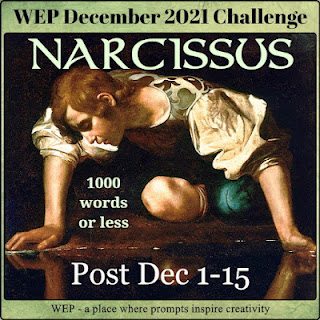


What are they doing … restoring me, repairing, re-painting me, cleaning me …? I know I'm 500 years old but … it is 1997 after all.


They've been nibbling pieces of my paint, crushing the rough pieces of oils in their fingers to dust – for some reason they put this stuff into little vials – now I could gaze at those pieces of me …
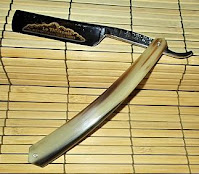


Cut-throat razor
... they take me off into their ether … there I'm scrutinised from all angles, put into metal boxes which flash lights at me, other containers brightly shine at me … some close-up, sometimes from afar …


… those people stand and stare, gossip until I'm subjected to some infraction … they seem to think it improves me – how could it? I am me – me - Narcissus – I, I cannot be perfected …
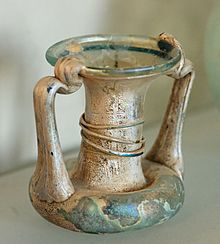

Syrian Vial from the 4th C -
today they are made from glass


Caravaggio created me using chiaroscuro … now he was allowed to pore over me, observe my very movements … so that I, in all my perfetto youth, would be captured tenebroso...


I believe they call it research … to see how dark and grubby this masterpiece of me has become – but look ... I shine so brightly out of the shadowy canvas … you can still see my reflection clearly in the pool – but they keep working, thinking they can buff me up …


St John the Baptist by Caravaggio
(1604) highlighting Tenebrism


Over the centuries they've dusted me off – then they attack me – it's nearly the 21st century – what do they expect … I am valuable as a masterpiece (that has not been so closely examined).


Yet if only I had known what was to come in the next 24 years … they've lost their creativity … it seems they punch things like keyboards (similar to clavichords) and out appears from the constantly changing mirror in front of them many images of me …
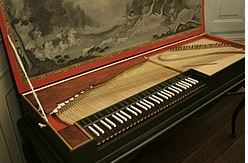

1977 unfretted Clavichord
I am me – me - the way Caravaggio painted me so empathetic to my youthful appearance – these 'reproductions' as they are called – do not credit me with Caravaggio's sympatico art-style.


Really they should leave me alone – I enjoy my place on the wall of the National Gallery of Ancient Art, Rome – where everyone can and does so admire me … completely fawning over Caravaggio's creation.
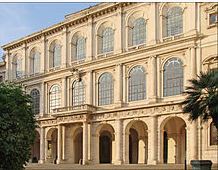


National Gallery of
Ancient Art, Rome

Wear and Tear – they need to look at their own lives … I've lasted more than 500 years, expect they only live about one fifth of my life.


Oh I'm so sensuously beautiful – and will be forever more … no wear and tear for me … more importantly no ageing.

Smartphone screen 21st C


The art work may age – and they can do their damnedest to restore, repair, or conserve – definitively in the era they live in … the technology seems to find things that would not have been found in earlier centuries, but I remain me – "Narcissus".


Wear and Tear begone!


Fine Art Conservation YouTube video by 

Julian Baumgartner of Chicago - for anyone interested


Hilary Melton-Butcher

Positive Letters Inspirational Stories

Thursday, 11 June 2020

Pesky Beach Flies, essentially Eastbourne updates …


Well a few things to update you on … we had a Python, a Hippopotamus – not real in the 21st century, bookshop and hotel fires, shingle history, and those pesky flies …


Looking down four road levels to the reef and sea
The python – yes: one was released into the foliage near where I quite often drop down to reach the lower promenade … 


Sub-Saharan Ball Python


... snakes I admire, but have never been my favourite …


Waiting at an ice-cream or cafe stop over ...
Hippo with dog watering bowl
Quickly moving on to a much larger animal – the hippo – around 600,000 years ago exotic animals roamed our rivers and valleys, when we and Europe were one landmass … this hippo though prefers walkers with dogs …


In the midst of the repairs
Fires – Camilla’s bookshop was getting new facades, floor and ceilings, book shelves, signage when I went past at the end of May – and met Camilla … asking after the state of the shop and Archie, the shop’s parrot, he is safe … while it happened to be his birthday – all of 25 years on May 28th … so I think she was pleased someone asked after him. 


They lost lots of books … as the water damage went down into the basement … and now there’s the smoke damage to look into – still at least it will re-open when the time is right …


Spring bedding from the carpet gardens has been removed,
making way for the summer plantings.
Scaffolding in and around the Claremont, while
the Burlington Hotel is the building run you can see

The Claremont Hotel is being propped up, and has ongoing work being done to its utilities … but the Burlington Hotel, next to it, has lost its main customer base – a coach tour operator which has gone bust.  


How these two hotels and at least one other in Eastbourne can cope – we will wait and see … times are a challenge.


'Rainbowing' in action

Those shingle workers are at it again … I gather this spraying technique is known as ‘rainbowing’ … 


Looking west towards Beachy Head -
during early lock-down
... the shingle is unloaded about a mile from Beachy Head, as Holywell is found at a Site of Special Scientific Interest … dumper trucks take it along the beach on that last mile.


Working area ... during lock-down - when no tempting
ice-cream parlours would be open.

The system is that the dredger, Sospan Dau, with its full load arrives at high tide … discharges its load ...


... leaves for the Owers bank to the east of the Isle of Wight … to suck up another load of shingle sediment … and repeat the process.


The Owers - to the east of the Isle of Wight,
off the West Sussex coast - shingle banks
Sospan Dau is a Welsh name … originating from a famous folk song, Sosban Fach and Llanelli’s tin plating industry … Sospan being the Welsh for Saucepan and Dau being Welsh for Two … a successor dredger to Sosban Fach (little saucepan).  Please see Wiki!


Weenbrug - a Dutch name from a map of
1583 ... with the shingle banks marked

The Owers Bank has some history too … before the 1500s an early trading port, Rumbrug, could be found … as shown in this Dutch map … 


... but still appears on The Owers shingle banks map of today to the east of the Isle of Wight …


Low tide, the reefs, a groyne, the strandline
on a hot May early evening day

… and now we’ve been lingering far too long on the sticky Eastbourne shore in this time of Covid 19 and our hot sticky May month …


… those pesky beach flies will be doing their good deeds … and no doubt irritatingly dropping in on our sweaty, sun-stoked bodies … the fat squidgy larvae will work their wonders … eating through the flotsam and jetsam curled up onto the shingle after high tide …


Seaweed fly


… reminding us of the ancient ecosystem, that since time began, has been recycling all before it … plump larvae, beetles, flies, insect and spider predators … ready to feed the birds and their chicks.


Dorset's coast (further west) with its
impressive strandline
The strandline is an ancient phenomenon having a unique biodiversity and ecology … which we are only just beginning to understand … let it do its work – we just need to take the dreaded plastic and other particular nasties away with us.


That’s all folks … until I find one more thing I’d like to write up re Eastbourne … but the Sospan Dau ended up linking a Welsh thread to Eastbourne’s seafront …


A bank of vegetation just above the first promenade

The sunny weather has disappeared … down here we have a little much needed rain … take care each and everyone of you …

Extra note on pesky flies: - they're not an irrelevant nuisance on the beach.  The play a key role in cleaning up the debris, without them beachcombers would be knee deep in smelly slime.  There are many species - each one specialising ... rotting seaweed, or bodies of animals ... and all other, except that dreaded plastic ...

Wiki - Sospan Dau ... info on the dreder ... 


Hilary Melton-Butcher
Positive Letters Inspirational Stories

Tuesday, 26 May 2020

The King’s Observatory, Old Deer Park, Richmond …


This was just an amazing outing … to what is now a private residence ... 


The King's Observatory southern entrance
(on a coolish autumn day)
Richmond Palace of Henry VIII and Elizabeth I’s days (16th century) had been demolished … 


... but the hunting grounds were still in existence surrounding the remains of the Carthusian Monastery, built on the orders of Henry V in 1414.


A model of Richmond Palace ... only vestigial
traces remain - notably the Gate House, which I walked
through on my way home

King George III (1738 – 1820), who had always been fascinated with the science of his time, used to visit Richmond Lodge, his country retreat ... 


The telescope cupola
seen from the roof


... it was here that he would construct an observatory … to view the heavens and, in particular, the 1769 Transit of Venus. 


An image of the sun captured in the last
Transit of Venus 2012 ...
Venus is the black dot upper right

This rare astronomical event permitted scientists to gain the first realistic estimates of the size of the Solar System and the distance between Earth and Sun. 


Account of George III's observations

King George, his wife, Queen Charlotte and guests were in attendance, thenceforth the King regularly used the Observatory for various purposes, storing of his instruments, educating his children … while staying at the Lodge.


The River Thames loops round
Richmond Park


The architect, Sir William Chambers (1723 - 1796), completed the building, raising it above the floodplain, with its first entrance from the north side near the River Thames … the waterway connecting early royal residences - Greenwich, the Tower of London, Whitehall, Richmond and on to Windsor.


the grounds are now part of
a golf course - so have
significantly changed.


Sir William also loved Chinese landscape and had on a few occasions travelled to Canton to study it more thoroughly … which he then incorporated into the more formal Italianate style of the parkland at that time.  He was responsible for the recently renovated famous ten storey Kew Pagoda in Kew Gardens nearby …


… this put him at odds with Lancelot Brown, the ‘great English 18th century gardener’ known as ‘Capability Brown’ who favoured open parkland.


The magnetic huts, seen here across the lawn,
have been moved and are now together
The Observatory passed from royal hands in 1840, via the Royal Society, to the Meteorological Office, and eventually handed back in to the Crown Estate Commissioners … reverting to its name of The King’s Observatory.


Looking down from the roof


It was then leased as a commercial office building in 1981 … the lessees didn’t give the building much respect … but thankfully in 2011 permission was requested to change the use of the building to residential, which was granted in 2014.


Not the original telescope


The present owner has restored and renovated this incredible building to Grade 1 building standards, including its telescope cupola, which opened for private tours in 2019 when I was able to visit.  Thank goodness I went … I so enjoyed it. 


Also getting the tube across from Victoria Station, rather than travelling by barge, or taking a horse and cart from central London is considerably easier and quicker!


Custom built library table,
with this beautiful carpet
The interior has been restored to exceptionally high standards … the present owners having connections with Hong Kong and Canton.

The building contains pairs of connected octagonal rooms … this has been painstakenly highlighted using this superb carpet under the equally special library table.


Looking through from the library
to the dining room


The glass cabinets in the original construction were used to house the king’s ‘treasures’ – which are now safely stored in appropriate scientific institutions in London.


The restored glass cabinets


When the cabinets (they are also Grade 1 listed status) were stripped back for restoration and repainting – it was found there were 18 layers of paint … the first colour has been faithfully reproduced (the duck egg blue as seen looking through from the library to the dining room in the photo above).


The drawing room


The early Prime Meridian at Kew goes through the drawing room … and then was used to co-ordinate triangulation points for the official meridian (0 degrees Longitude) at Greenwich (Greenwich Mean Time - the mean solar time at the Observatory in east London at Greenwich).


The “magnetic huts” erected in 1854 and 1912 contain no metallic nails and were used for scientific experiments … while in WWII weather balloons were dispatched from them to check the winds in the upper stratosphere. 


One wall - the rest of the walls
are covered in a series of
panoramic views
Fromental Company of London and Hong Kong designed and created the exquisite wallpaper in the dining room, working closely with the owners on this unique project.


The traditional hand painted silk wallpaper of a Canton River Scene, depicted the foreign factories in China, c 1772, being roughly the same age as the Observatory.


Fromental make these hand painted silk wallcoverings in the long-established Chinese painting style using traditional materials.


Another Fromental scene,
incorporating the porthole
window of the original building


This delicate wallpaper took over 4,300 hours (getting on for six months) of hand painting the fine details in Chinese water colours onto silk, that is then mounted onto traditional rice paper backing before the final more European elements, such as the clouds and western figures, were add by  a UK based artist.


I still cannot believe I was able to walk and wander around this amazing home – led by the owner, who was a fount of knowledge with impeccable style.  I could have spent hours talking to him.


Walking back to the tube and home ... 

It was a wonderful outing and then I had an autumnal walk back to the river before finding my way to the station and eventually home.


The King’s Observatory official site – with full details, photos and its history …

Fromental Company’s web site explaining how they work … and showing other projects …


Hilary Melton-Butcher
Positive Letters Inspirational Stories

Monday, 18 May 2020

Shingle, Prospect Cottage, Kettle’s Yard Museum … and Pebbles …


We all love to be by the seaside … walking in the soft sand, if one is lucky, or dropping to one’s knees to pick up pebbles … we’ve all come home with them … either with pockets filled up by the kids, or just by ‘us’ enamoured with a pebble’s charm …


2012 The Garden ... sculptures
and plantings on the shingle
I’m sure you’ll see this links with my recent posts about Eastbourne with its shingle beach, engineered groynes, which while attempting to stop the town flooding, curtail the easterly tidal drift … here’s yet another of this eclectic non-series …


Selection of pebbles
As I’m listening to the radio more in these lock-down times … my thoughts wander off – and this programme was about pebbles … art, gardens, geology, museums … so cometh this post!


Chicago's cuspate foreland

The pebbles find their way eastwards to Dungeness, a headland formed largely of a shingle beach in the form of a cuspate foreland, created primarily by longshore drift. 


Dungeness from the air
 There can be little development in that unstable coastal setting, but there is a part- decommissioned Nuclear Power Station, an old runway, a necessary intermittent railway terminus, subsequent limited housing, beach cottages for the fishermen … 


... and Prospect Cottage … the ecological site has protected and international conservation status across a number of disciplines … including geomorphological … a place of natural value to many a scientist …


Prospect Cottage - 2007

Derek Jarman (1942 – 1994), seriously ill with HIV, purchased the cottage to escape London and set about creating a retreat, a shingle garden … 


... he was a talented film director, stage designer, diarist, artist, gardener, and author … this landscape offered him consolation during his latter years.


An earlier view in 2004

His home has recently been purchased by the Art Fund so that the whole can be conserved and maintained for the future … the building, its contents and garden …


During the ‘pebble radio programme’ a sedimentary geologist discussed various rocks with resultant stones which find their way into our world of today …


The book the radio programme was based on
… one was a pebble surrounded by another aggregation … it was mentioned that this had ‘popped out’ from an iceberg almost a billion years ago … it wasn’t found in England! – but off the Alaskan/Canadian coast …


… that pebble is held in scientific splendour in Cambridge - then mention was made of Jim Ede’s Kettle’s Yard ... 


Kettle's Yard - was four cottages ...
now with an extension to
hold Jim Ede's various collections
... described as one of the country’s most intimate and spellbinding museums, the collection of one man and his unerring eye; restorative, homely yet life-changing …


Jim Ede spent time in Cornwall collaborating with artists in the studios at Newlyn and St Ives … after his work at the Tate Gallery, London proved too tedious to carry on … ‘fighting the conservative establishment’ … he set out on his (professional) itinerant life …


Alfred Wallis (1932)
The Hold  House Port Mear Square Island
Port Mear beach
I know that was another link-jump … to St Ives, Cornwall and the naïve artist Alfred Wallis (1855 – 1942), who worked all his life as a mariner, before turning fisherman-artist … Jim Ede encouraged him, while collecting some of his works …


Alfred Wallis (1942) - Noah's Ark
I have mentioned Wallis before when I wrote about Cornwall … and when I set up an Easter family tour of art at the Towner Art Gallery, Eastbourne, postponed til next year …


… I spotted that the gallery holds works by Alfred Wallis … and so he is one of the artists I specified we would be shown.


Longshore drift showing spit build up
Surprisingly this life of pebble art has come full circle back to my home … after starting life billions of years ago, rolling into an ocean, drifting with the tides …


Blake's entry in his
Songs of Innocence and Experience
1794 collection of poems

… to perhaps be found in a garden, as an art piece, a photograph, or recorded in words … as the lines in Blake’s The Clod and the Pebble mete out:


‘But a Pebble of the brook
Warbled out these metres meet: …’


courtesy of Kettle's Yard Museum
one of Jim Ede's artistic works
I have long wanted to visit Cambridge and almost went before lock-down … so I will add Kettle’s Yard to my list … and see the Cornish, Sussex connections with art …


May you roll gently on as the pebbles are doing in this time of challenge …


Kettle’s Yard Museum, Cambridge …


Hilary Melton-Butcher
Positive Letters Inspirational Stories