Tuesday, 17 November 2015

West Country ‘historical’ tour …part 1


Jenny’s trip round Devon, Cornwall, Devon and Somerset … where I chauffeured, and happily joined in, as my mother’s cousin and I traversed parts of the West Country …

This is an incredibly professional map?!  Each splodge marks a town we stayed in!
We started west of Exeter, at Drewsteignton village, south to Torquay-Paignton,
on via Dartmouth to Salcombe, Liskeard and the artist lady, next to Bude, then
Ilfracombe, then Minehead and finally into the Somerset countryside, near
Taunton and Wellington.  (The "H" marks Hartland Point - incredible geology).

 … these are some of my favourite things was how I started last year’s posting, when I drove Jenny ‘around’ and up to Derbyshire before coming back via Malvern andOxford …


… this journey’s postings will be shorter but there will be lots of them – as I’ve plenty to tell you about … this time we started at the same point west of Windsor Castle and London … then drove to the Old Coach Road west of Exeter and further into Devon and Dartmoor.

The Old Inn 19th century

Jenny’s objective, who lives on Vancouver Island, was to see parts of the UK she hadn’t seen, to visit places where her father’s family had lived over the centuries … and to check on things re Emily Hobhouse – her father’s aunt – as Jenny has Emily’s papers and has written three books on Emily from different perspectives.


A typical footpath and bridleway sign
To meet and greet some relatives and a new friend, who is writing a novel sort of based around Emily, South Africa, Italy and Cornwall – the artist lady concerned lives outside Liskeard, where there are panels in the Museum dedicated to Emily.


Jenny had given me a list of places she wanted to visit … and so I booked the hotels – all 8 being one night stands … I’ve no idea how Jenny does it – I have some of the genes, I know … but I do wonder sometimes!!  


Cottages in Drewsteignton
Six nights in hotels, all very different, and two nights with the artist lady and her husband (wonderful) and the last night for us both with another near cousin of Jenny and my mother's vintage ... also a pleasure to meet and see the family.


I book-ended the trip with a night in Chichester and another in Wellington, where we were already, after I dropped Jenny off at the train for London: visiting English South African friends ... i.e. I met them out there ... and now I see them here.


Mobility rage - not that I think my
relatives would engage!  Just a fun photo


I will start at the beginning … I arrived on time this year! … to find my two elderly relatives had taken themselves off to look at mobility scooters … husband and daughter were surprised to find me laughing… such is life – the elderly have minds of their own!


It was a chance to catch up with them … and I’d never met their daughter before – we are cousins once removed.  Then we stayed and had a lunch of soup, salads,
cheese and fruit to sustain us.


Drewsteignton village and the pub,
which we didn't visit.
We didn’t have that far to travel – about 3 hours – just beyond Exeter … so set off to reach the village in daylight.  Jenny had wanted to visit this area as the family lived there in the 15th century …


The Old Inn


I had booked into the Old Inn in the village, only to find it was really a restaurant with rooms … but too late, I later found out there was a pub we could have stayed in.


Frankly – I’m glad we stayed where we did … it was an experience: it really was an experience: next but next post gives these details ... be ready to drool!


View of Church from churchyard


So our journey starts out … we are particularly interested in areas where Jenny’s father’s family had originated from 500 to 750 years ago, to recent family homes … but also found ourselves considering Neolithic settlements of over 5,000 years old ... a Damien Hurst (born 1960) 20 m (66 feet) high sculpture ...


Come and join us for a drink ...
we very carefully skirted
well south of the Prison!


I will, I hope, take you along with me as we view parts of England I have never seen and learn some interesting historical, geological, archaeological and family stories along the way – while we sustain ourselves with local fare.


These may well take me happily towards the A-Z next year ... but I will break my journey for some other posts ... in the meantime - cheers!!


A link to Wikipedia's page on Emily Hobhouse ... there are parts of this that Jenny finds are inaccurate (as she has her papers, I believe she would know).  

But I need to write a dedicated blog post on Emily as I see her ... I have said I'd give a talk about her, early next year, at our Social History Group.


Hilary Melton-Butcher
Positive Letters Inspirational Stories


Saturday, 14 November 2015

White Feathers – First World War …


From my last post “Remembering” a number of you noted or brought to our attention in the comments other aspects and I thought I’d mention one in particular and ‘tell the story’ of why White Feathers were given out …


… this post came to mind, when I realised that I couldn’t write a ‘normal’ post after last night’s events in Paris.


Some of the ‘White Feather’ information has come from a Guardian article of 11 November 2008, which can be read in full here: an evocative and important read …


… particularly in relation to the writer’s mother and the dementia her mother suffered in her last years in the 1980s – you need to read what she ultimately remembered … desperately sad.


It’s interesting how an action, such as 'white feathers' by the masses is often misguided in its approach … though at the time, of course, we/they don’t realise … it’s only years later the reasons and effects become apparent.


How often do we criticise or form an opinion about something … that we’ve no idea about, or cannot see the full picture with all its ramifications.  We don’t think about the other side of what we see, or might be the cause.


Cowards for not serving … were they?  As we know John Kipling had been medically rejected … any man rejected by the authorities had no way of showing they had tried to serve.


The Tower of London
Conscientious objectors … some were taken to the Tower of London and locked up … in 1916 … but were not cowards – they were conscientious objectors.


A White Feather has been a traditional symbol of cowardice, used and recognised within the British Army and in countries associated with the British Empire since the 18th century …


… it also carries opposite meanings, however: in some cases pacifism, and in the US, of extraordinary bravery and excellence in combat marksmanship.


... you coward - why don't you enlist
I quote from Wikipedia‘a private who was on leave, was riding a tram, when he was presented with a white feather by a girl sitting behind him.  He smacked her across the face with his pay book saying: “Certainly I’ll take your feather back to the boys at Passschendale.  I’m in civvies because people think my uniform might be lousy, but if I had it on I wouldn’t be half as lousy as you”.


Sadly humans tend to form an opinion, without perhaps taking the time to ask a little more, or understand the circumstances.

The words "The Glorious
Dead" on the Cenotaph

I was thinking about the phrase ‘The Glorious Dead’ inscribed on the Cenotaph in Whitehall … it perhaps appears ‘a strange phrase’ now – yet I guess refers back over centuries to the fact we fought for King and Country ...


... and in the eras gone by … that was the way the world was lived.   Today we live somewhat differently and think differently … we want our lives to remain as they are, but don’t expect to serve our country - unless we chose to.


The White Ensign, the Union
Flag and the Blue Ensign
In an article in History Extra I found some further information about the Cenotaph and the Tomb of the Unknown Warrior …


… the monument with the words “The Glorious Dead” was kept deliberately simple … but had been checked with religious leaders throughout Britain’s empire.


Mark Connolly, professor of modern British military history, has written this article on The Cenotaph …  again an informative and educative read.


Yesterday’s cruel mayhem in Paris, where over 120 have died, and another 100 are seriously injured, is something I cannot bear to think about – as a French bystander remarked … so many are my own age – young.


 This post is intended for reflection of damage done … and to remind us all to forget our own troubles – please just remember and consider others, give thought to all things – be caring, be understanding, live in peace … life could be too short.


My thoughts to all who mourn for Paris at this time …


PS - Diana Wilder has commented and left us a note on a Photographic Exhibition, and book, that I completely missed and had not heard about ... by Chloe Drewe Matthew entitled "Shot at Dawn" ... it is definitely worth having a link here to the Guardian article.


Hilary Melton-Butcher
Positive Letters Inspirational Stories

Wednesday, 11 November 2015

Remembering …


This year many services and commemorations have been held for times in the Great War, and for battles of the Second World War.


"Kipling's at War" - the poster explaining the exhibition


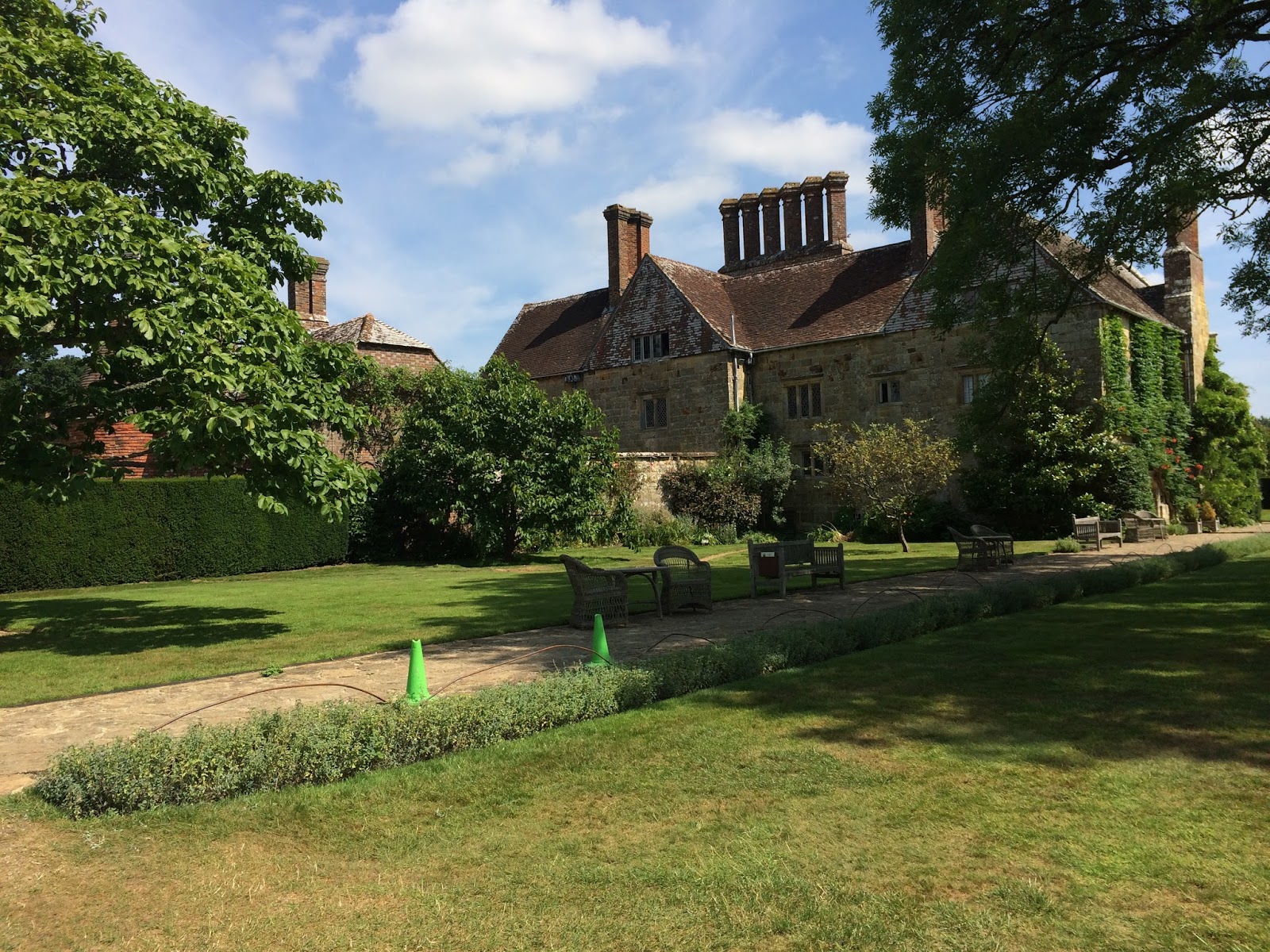
The grounds, the pond with Batemans in the background
Batemans, Rudyard Kipling’s, home had an exhibition marking the outbreak of WW1 in July 1914, during which Kipling’s beloved son was killed … Rudyard had been anxious, for the pride of the family, John would serve, despite being rejected for medical (eyesight) reasons.


If you would like to expand you can
read of John's 'exuberance' on being
commissioned.


Kipling lobbied governmental and military authorities to let John serve … eventually in 1915 he was commissioned … then sent into battle in a reinforcement contingent – two days later he was dead.


Notes of John's demise

Some poignant letters and notes were on display … as well as some pertinent records on the Kiplings' lives at Batemans.


The records of one of John’s friends, Rupert Grayson, who served with him in the Irish Guards were on display too – giving a feeling of the exuberance of youth … yet we know the sad truth.


Notes from Rupert Grayson, a friend
of John's in the Irish Guards


The shell that wounded Rupert Grayson was the one that killed John Kipling.  Rudyard Kipling was keen to maintain contact with the young people who knew his beloved son, especially Rupert.  I cannot see what happened to Grayson, but have put Lt Col A R Rawlinson’s link here … where the above details are mentioned.


The First World War was the catalyst for a great deal of literary output.  For the first time writers challenged the accepted sentimental view of war, and many of those who served did not live to see their works published.


Some quotes set out here
Some we know today were written early in the 1900s, others during the War and others many years afterwards, were powerful and usually disillusioned.  For example: Rupert Brooke; Wilfred Owen; Siegfried Sassoon; Ford Madox Ford; Robert Graves; and Hemingway … to name a few.


John’s note written in the dreaded expectation of not returning – received by so many families: 

“Well so long old dears. Dear Love, John.”


An old cyprus in the gardens at Batemans


Rudyard felt enormous pain … the Kiplings kept John’s bedroom as it was – and we can see it like that to this day: a young man’s room … with sports gear, some toys lingering … 


Kipling included in his Epitaph of the War (1914-1918); the Common Form quote: If any question why we died/ Tell them, because our fathers lied”


A booklet written by Kipling
regarding the Commission
and its ideals

After the War and partly in response to John’s death, Kipling joined Sir Fabian Ware’s Imperial War Graves Commission (now the Commonwealth War Graves Commission), the group responsible for the garden-like British war graves that can be found to this day where troops of the British Empire lie buried.


His most significant contribution to the project was his selection of the biblical phrase “Their Name Liveth for Everymore” (Eccliasticus 44.14, KJV) found on the Stones of Remembrance in larger war cemeteries and his suggestion of the phrase “Known unto God” for the gravestones of unidentified servicemen.  He chose the inscription “The Glorious Dead” on the Cenotaph in Whitehall, London.


Batemans from the west side


May we remember with love and affection all who have died helping and saving their country from evils thankfully unknown.


In war, in trouble spots, there are no unwounded people – as we wear Remembrance Day poppies, let us unite against war and bring the world closer with peace and harmony … 

... let the butterfly effect take flight: helping others, bearing no acrimony, no misery, no selfishness, no uncertainty in times of strife, radiate out similar thoughts to make this wonderful world a better place.


Poppies, daisies and cornflowers in Remembrance
Let us remember all who have suffered, are suffering, will suffer … and let us share what we can with others.


Different countries remember at other times ... this is for all who remember.

Please have a look here for more information on Rudyard Kipling's home and also John's bedroom ... as it was kept until the Kiplings had died:


Putting the House to bed - part 2: this shows John's bedroom

This post by Mike from the blog "A Bit About Britain" - is so evocative ... I love the sculpture, the artistic form ... and I just needed to remember it - so "Eleven-O-One" is linked here ... reference:

      the 11th hour 
               of the 11th day
                      of the 11th month
                                      1918


Hilary Melton-Butcher
Positive Letters Inspirational Stories

Saturday, 7 November 2015

Peace in the World --- Thankfulness --- Kindness …


We are coming up to Thanksgiving, followed by Christmas … it’s the time for giving, thinking and being kind … many bloggers have been in this mode recently …


Judy Croome wrote about Blog4Peace … she also wrote an amazing poem about future archaeologists and what they would find in our 21st century debris … I’m quite into ancient eras at the moment … so this resonated.


To us all – “Dona Nobis Pacem”  (Grant us Peace)


Paula asks questions

Paula too of Smidgens, Snippets and Bits blogged about Blog4Peace … she very sadly lost her husband last year;  they had an extended family and loved everyone dearly, doing as much as possible for them.


c/o Betsy and her Ohio autumn colours


Betsy of “My Five Men” wrote this post “Thirty Days ofThankfulness” … she is noting one thing each day that she’s thankful for – it’s on her sidebar.


She love cats ... and her five men - her autistic triplets, her hubby and her first born son.


Beate (from Germany) and Keith (from the good ol’USA) – bloggers, who met, married and let us know in blogland … they always bring much love to the blogosphere – Beate’s return to posting is entitled “Let’s Be Kind”.


Love Is ...!!

Thoughtfulness, Caring for others, Being interested and Listening … all essentials in this day and age …


I am so grateful for my new hip … which works wonders for me … and when I remember I smile, am not in a hurry if others need to push on, am grateful for my life and the opportunities afforded to us through blogging.


We are lucky souls … and I’m sure we’ll all remember others in these coming weeks – a kindness a day, a donation of food, or some change to a charity, a volunteering deed … we can all find a way to help others and bring a little light into some shaded lives.


The Cenotaph
Remember too … to keep some in reserve for perhaps the more difficult time of the year in the northern hemisphere … before the sun rises during 2016’s Spring.


My Remembrance Day post will occur on the 11th, albeit Remembrance Sunday is tomorrow here in the UK with the Cenotaph Service from Whitehall, which is our way of remembering those who died in the two World Wars.


PS to get rid of that grey bar … click the ‘Got It’  words and it will disappear … leaving the Search Bar free …

Spare some time for others ... the time will inspire you to help more ... 

Hilary Melton-Butcher

Positive Letters Inspirational Stories

Thursday, 5 November 2015

Pluto and Venetia Burney ...


Stephen Tremp was over at my blog on Monday … and I thought I’d post something ‘heavenly and historical’ to tie in with his interest in space and the planets …


Pluto and the moon

Some fun facts about Pluto the down-sized dwarf planet we know today …


What to call it?    The discovery in 1930 had made headlines around the world … with the Lowell Observatory in Arizona receiving over a thousand suggestions.


Venetia Burney, aged 11 in 1929
(1918 - 2009)


Venetia Burney, an eleven year old schoolgirl in Oxford, who was interested in classical mythology, had heard the story about the discovery from her grandfather, Falconer Madan, who was the Librarian at the Bodleian … and suggested the name Pluto.


Showing range of planets around the Sun


Pluto was the Roman God of the Underworld, who was able to make himself invisible, as the planet had done for over 80 years … it was ‘hidden’ behind Neptune.


Falconer then relayed the suggestion to the Oxford astronomer, Herbert Hall Turner, who cabled his American colleagues at the Observatory.


Percival Lowell (1855 - 1916)

“Planet X” became Pluto … the first two letters “P and L” were another clincher:   for Percival Lowell, who was instrumental in finding the illusive planet.


Her grandfather was a good grandpa … he gave Venetia a reward of £5 (equivalent to GBP 300, or USD 450 today).


The name was soon embraced by the wider culture including Walt Disney who called Mickey Mouse’s canine companion Pluto.


New Horizons Flyby: Launched in January 2006
Jupiter System flyby February 2007
Pluto System flyby July 2015
going on into the Kuiper Belt and beyond 2016 - 2020

The new element Plutonium was so named after Pluto …  in keeping with the tradition of naming elements after newly discovered planets, following uranium, which was named after Uranus, and neptunium, which was named after Neptune.


USA postage stamp issued 2015

It’s always fascinating finding out these connections … but I love the idea of an 11 year old girl in England, Venetia, suggesting Pluto’s name … and how Disney was inspired to name Mickey Mouse’s side-kick Pluto.


Just a pity it’s no longer a full Planet but a dwarf one … Pluto is really tiny – smaller than our moon, which was confirmed by the New Horizons interplanetary space probe traversing our universe, which made a fly-by of Pluto the dwarf planet.


Stephen's blog's Breakthrough photo
It’s good to tie in with Stephen and his launch of Salem's Daughters, as one of his other major interests is science, and to post something relevant to today’s New Horizons mission into space and that tiny ex planet Pluto!


More information on Venetia Burney can be found here – she studied Mathematics at Newnham College, Cambridge … though practised accountancy before moving across to teaching.

It's Guy Fawkes day here ... and we will be full of fireworks ... I'm in London, so will see numerous eruptions of coloured fire as I travel home on the train.  

If you want to read about the "Guy Fawkes" ... just type his name into the search bar at the top - but you might need to hit 'got it' first on the dreaded grey bar that appears at the top of blogger now - that will make the grey bar disappear .. and then a few different posts will appear.

Hilary Melton-Butcher
Positive Letters Inspirational Stories