Showing posts with label Authors. Show all posts

Friday, 17 April 2026

Fritillaries …


Frittering away … well enjoying some time-space … with a nodding head as the Winter and early Spring disappear before an easier Summer, one (I do) hope/s, at least on the nature side, arrives …

Snake's-head Fritillary


Diddle away dissipate fribble away … words, words, words … aren't we lucky to have so many expressions to illustrate our ideas …


I'm on slow-go time … lots to do, and no doubt will get there … so in the meantime … some wonderful plants from a by-gone era …


Nodding Meleagris
in the meadow


Fritillaries first recognised in Europe in the late 1500s … characterised by nodding flower heads … probably brought over from the Middle East ...


Cultivated (Dutch) Fritillaries

... in Oxford there's a wild meadow, which hasn't been cultivated for centuries, as it's annually flooded …


... once the fritillaries in Iffley Meadows have finished their flowering, the deer herd is moved in for the summer and autumn …


Meadow Fritillary - underside of the female
Shakespeare in his narrative poem Venus and Adonis, Adonis metamorphoses into a purple flower checked with white:


By this, the boy that by her side lay kill’d

    Was melted like a vapour from her sight,

    And in his blood that on the ground lay spill’d,

    A purple flower sprung up, chequer’d with white.


Helmeted Guinea Fowl in Namibia


The Latin specific epithet 'meleagris' means “spotted like a guineafowl” …


Then I came across the 'Fritillary' an academic term's magazine of the Oxford Women's Colleges … published between 1894 and 1931 …


Fritillary
Summer term
1927 magazine


... which I'd noted in the book Joanne Faries had reviewed last December … titled “The Eights” …


... and came about from Joanne Faries at her Word Splash blog in December last year when she reviewed “The Eights” - about four women in 1920 starting at Oxford University … which took me back to my school days in Oxford, and brought some history to life …


... and then oh yes! - in the book Joanne recommended … 'The Hilary Term' … which has just finished. I'm more than delighted today … I'm cheered at the coincidences!!


So here's to hope – I do fall on the side of optimism … and relate to my name derived from the Latin 'hilarius' – cheerful merry...


Section or Semester heading

Joanne Faries - Word Splash blog 'The Eights'


Hilary Melton-Butcher

Positive Letters Inspirational Stories

Sunday, 8 March 2026

World Book Day … and International Women's Day …


The aspect of reading and its benefits are being encouraged for all … be it for the little ones, or for those older, perhaps even silver ones, who've not explored what's out in the written world …


Oracy is a word I hadn't come across … meaning the oral equivalent of literacy and numeracy … numbers can defeat many too!!


The National Literacy Trust empowers people to achieve literacy skills that'll be needed to succeed in life.


One book to start with (I've more … I'm back!) … I've just read Julia Gray's 'I, Ada' about Ada Lovelace, Byron's daughter.


Julia Gray writes as though she's Ada … bringing her story to life, yet sensibly adding snippets to bring the story more to our attention … as we know relatively little about Ada …

Ada - portrait by Margaret
Sarah Carpenter (1836)

... at the end in the author's note Gray talks about 'imagine out' from what is known or can be found on a subject … then round out those notes … which Gray describes as some kind of middle plane between fiction and non-fiction where books like I, Ada must sit...


... Gray goes on to say that whatever topic she's been researching there will always be questions that can only be answered by imagining out as to what might have happened … enlightening the reader a little more about the subject to hand …


I found this imagining aspect really quite insightful … and, oh yes!, it's a great read …
about the mathematician, who envisaged the analytical engine … Ada Lovelace is often considered the first computer programmer.


Illustration from Sydney Padua's
graphic novel

2015 celebrated Ada's bicentenary … when I'm sure I came across Sydney Padua's webcomic and graphic novel 'The Thrilling Adventures of Lovelace and Babbage' abbreviated in a newspaper … bemused and hooked me …


I believe I'm on the way to being back … and am feeling distinctly easier … so here's to the future. Books galore and Women galore on the way to you in the coming months …


Ada - the computer programming language is named for her ... all two hundred years later ...


Ada (programming language) ... 

Literacy Trust organisation ... World Book Day ... and skills ... 

Not Your Typical Role Model from the 18th century - an overview on Sydney Padua's graphic artist's take on Ada Lovelace ... an overview by Dr Hannah Fry - who is Cambridge University's Professor of the Public Understanding of Mathematics ... utterly fascinating (only 1.15 clip's viewing) ... 

Hilary Melton-Butcher

Positive Letters Inspirational Stories

Friday, 13 February 2026

Balance of Nature ... Jacqui's book launch ...


Apologies one and all … life has caught up with me – Jacqui booked her 'date' with me back in December tying into the launch phase …

Jacqui's book ... without
the extra title would help -
but ... so be it


... times were free then – but, as happens, life and people caught on … and here we are in the New Year – with too much happening in February …


Hospital today, but that's another story, a new appointment booked for next Friday … so life can go on and I can finish this week, then my talk, I'm giving, on Mrs Beeton, to our History group, on Monday – which I wasn't expecting to be asked to do in February – ah well!!


Daylight is getting longer … bliss … and I'm sure my mojo will properly return soon – but for now, my Balance of Nature is there … but pretty static …


Jacqui's 'handle' for us all to use ... 

Minor adjustments to the 'see-saw' and this week will have passed off happily … I'll be back properly soon …


For now – Jacqui deserves all the kudos we give her … I've loved the earlier books in the series, and this one I need to order and read – then I'll do a post anon … my choice was 'Book Review' … firstly: Do what you committed to do!! Failed in this case …

Crocuses (or Crocii) 
Spring is in the air

Congratulations to Jacqui for this launch – amazing achievement … and she's given us much to think about along our ancestral eras …

https://worddreams.wordpress.com/2026/02/13/im-over-at-hilarys-today/ 


Thanks for thoughts re hospital - just an outpatient visit, similarly next week - no emergency ... thank goodness.  I'll be pleased when this is all resolved!!


Hilary Melton-Butcher

Positive Letters Inspirational Stories

Wednesday, 4 June 2025

Savage Land update/extra for Jacqui …


When I spotted the Horned Melon … with names like African Horned Cucumber, Jelly Melon, or even Kiwano … so named by those down under in NZ – it looks to some extent like a kiwi … a prickly one, I'd guess …


African Horned Cucumber

... I thought of Jacqui and her prehistoric fiction … so here's another useful plant – should you ever find yourself stranded in the Kalahari or Namib deserts and need a drink …?!


Paleo Makgadikgadi Lake in
pre-historic times

However – the idea of the taste of these fruits really does tempt the palate to try … what's not to like about passionfruit, with the additional flavour of banana, or cucumber and lime?


It apparently has plenty of useful benefits … so I've included a link below to those suggestions – I do like the way they've summarised each one … but honestly do we need to be told to cut off the spikes before snacking on the peel?!


Illustration found inside the book - which
highlights where subjects may be found 
I've just had a look … and can get them via the dreaded A bookstore and all things beyond … as we can note here! I haven't ordered … they'd make me distinctly poorer … so for now they can rest on their laurels …


This is the book I refer to
One of my notes in last month's post for Jacqui inferred we could manage if we're left to our own devices – but honestly I've come across a youngster who obviously can't cook, orders a delivery-service breakfast at some ungodly hour in the middle of the morning – just about lunchtime! 


Female flower on the vine
I do wonder … she would never survive for very long … nor similar youngsters having not had to fend for themselves … sorry – I sound like a critical geriatric?!


Awaiting the sun to ripen the fruit


Anyway perhaps natural selection will take to weeding the human race?!


Namib - Sand and Sea
I do feel better – the brain murkiness has eased, which certainly helps – the actual clarification needs to be sorted out via the GP … but at least we know what's what … thanks for your thoughts one and all …


Healthline on the Kiwano melon - benefits

Savage Land - my post for Jacqui 

The presumed maximum extent of the Paleo Makgadikgadi Lake in early Pleistocene and the course of the rivers in the early to middle Cenozoic - website here ...


Hilary Melton-Butcher

Positive Letters Inspirational Stories

Sunday, 18 May 2025

Paradise and Beyond ...


Back to the coal face this past week … which has been somewhat torrid, but all is being sorted out with the NHS … life goes on – and it looks like at some stage an op … but for now back to some form of normal …

The Universe in Verse -
15 portals to wonder through
science and poetry


It was like Piccadilly Circus … people appeared, disappeared, reappeared, sat around, got called up, into one room and out again … then I got a hug from the nurse practitioner and sent on my way.


I took this little book with me for my appointment at the hospital 'The Universe in Verse' by Maria Popova, with illustrations by Ofra Amit … as you'll see from the descriptions I've attached ... pertinent to today for us to consider ... 


In here you'll find an article The Octopus and the Unknown, followed by a poem written by the author, 'Impossible Blues' …


Wislawa Szymborska
(1923 - 2012)


... Pi and the Seductions of Infinity with a poem by the Polish poet, essayist, translator, and the 1996 Nobel Prize Literature winner: Wislawa Szymborska (1923 - 2012) … I highly recommend you check her out …


An appropriate series of illustrated essays through the lenses of science and poetry. A celebration of beauty as we search (wherever we are in life) for the positive and reality.


Symmetry, and the Hidden
Order of Things


So these 15 portals are very appropriate for me at this time … the ups and downs … nothing serious, but something needs to be put into place – which is happening.


Flowers and the
Birth of Ecology


I hope you'll be able to check out this little book – lots of interesting notions and ideas in here … very thought provoking … and I leave you with a couple of notions to contemplate ... 


Without flowers, there would be no us.

No poetry.

No Science.

No Music.


I hope to be back to normal with my posting – which I know is 'never normal' – whatever that is … but I'll be around a bit more …


Thanks for being here …


Hilary Melton-Butcher

Positive Letters Inspirational Stories

Friday, 2 May 2025

Savage Land ... Jacqui's latest book in her magnificent series ...


What's more important to life … water, shelter, or food … or …. looking after all of Nature …

Jacqui - very happy with life
The lands our early ancestors explored … needed to escape from … stretched far into the distance … further than their eyes could see … what lay ahead – and how could they take care of their wandering communities.


An area known as "Moonscape" in
the Namib Desert
I can see little reason to not believe that the indigenous peoples of Southern Africa live much as the ancestors Jacqui writes about would not have similarly existed ... so this post will be in this direction ... 


Swakop River - flooding through,
opening up into the Atlantic Ocean,
having been in ephemeral state
Depending on the season our ancestors would reach out across the physical features of earth … following ephemeral river systems … being there when the rains would let lose their life giving waters …


Female Welwitschia plant - showing the cones,
which are ripe and can be eaten raw or cooked

… they knew they had to be near a water source, while they could manage without food for one to two months at a time – the moon cycles – they'd know they needed to find some meat, fish, plants and fruits … and which suited the human system – to keep the clan alive ... 


Mopane Tree
Shelter was essential too – if the area was wind-driven, they'd need to hide away at times, keeping out of the sun … and making sure they were protected in winter …


Mopane Worm on a twig
Those early indigenous peoples would know which parts of plants were edible, where to find them, which season they would appear … and if there were insects living around the plant … they could possibly be harvested … as mopane worms are to this day.


Tamarix, Acacia, Camelthorn, Mopane trees … also provide shelter and firewood – once the indigenous peoples had learnt about fire – these particular trees are known for their hardwood.


Birds would snuggle into the 
lichen hiding their young and eggs
Over millennia our ancestors would have noticed nesting birds, which birds would nest in scrapes, and how useful finding and building shelters would be ... also to access these birds for extra food - eggs and meat ... 


A Welwitschia plant - which can live
over 1,000 years - fibrous trails
Papyrus sedge has been used for millennia, as fossil records have noted, for fastenings … many stringy or fibrous plants … Welwitschia, Papyrus, reed strands would be put to a good many uses …


Dune Spinach - edible


Over time man has grown wily – now our brains are relatively large, with an enormous amount of power … to control the various areas of our life as we progress …      ?? ever forward.


We've managed to use and subdue most things … have we thought about life itself … we in the 21st century may never know what the future holds for the sophisticated animal that is today's man … but by encountering and mastering Savage Land … we've learnt … or have we …


as Jacqui says in her strap line to Savage Land

Nature Almost Wins …


Man v Nature - Jacqui's series - on how man survived critical events on our evolution ... 


My earlier post in January 2025 ... 


Jacqui's introduction to my delayed posting - apologies to one and all - tis here now ... 


Thanks for visiting ... and do buy/read Jacqui's books - they're very readable and enjoyable ... 


Hilary Melton-Butcher

Positive Letters Inspirational Stories


Tuesday, 29 April 2025

World Literature eating Soup, on a Lawn, while learning how to plumb a Drain...


Three Little Books with an update … nothing like mixing things up … just a little …


I took Kafka's Soup book with me to hospital last week … we failed … I read a couple of stories, but need to return in two weeks (12th May) to see if we can work something out …


Brilliant, caring, empathetic staff … I consider myself very fortunate … then the next day, to my surprise, the community nurses contacted me – that I wasn't expecting … but now I know I'm in the system …


... so after that brief intro … I trip the light fantastic … join me with Kafka's Soup, on Machiavelli's Lawn, learning how to Plumb-in Sartre's Sink …


Mark Crick wrote and illustrated these three books … short stories … he is best known for his literary parodies …


… you'll find recipes, do it yourself tips, or if you prefer … how to garden …


So join me in our bright sunshine … and bring a little bit of fun with you – let's tell stories of life and love …


… then to round this briefing off … my talk on the love affair between John of Gaunt and Katherine … gave much amusement and giggly laughter – even from the 'chaps' … I plagiarised some of the love elements from Anya Seton's story telling.


John of Gaunt (1340 - 1399)
Katherine Swynford
(1349 - 1403)


When you read Mark Crick's little books … you'll come across Virginia Woolf, Marquis de Sade, John Steinbeck … and more …


... or from Sartre's Sink you'll come across Julius Caesar 'Putting Up a Shelf', Emily Brontë 'Bleeding a Radiator', or finding Edgar Allan Poe 'Boarding Up an Attic' …


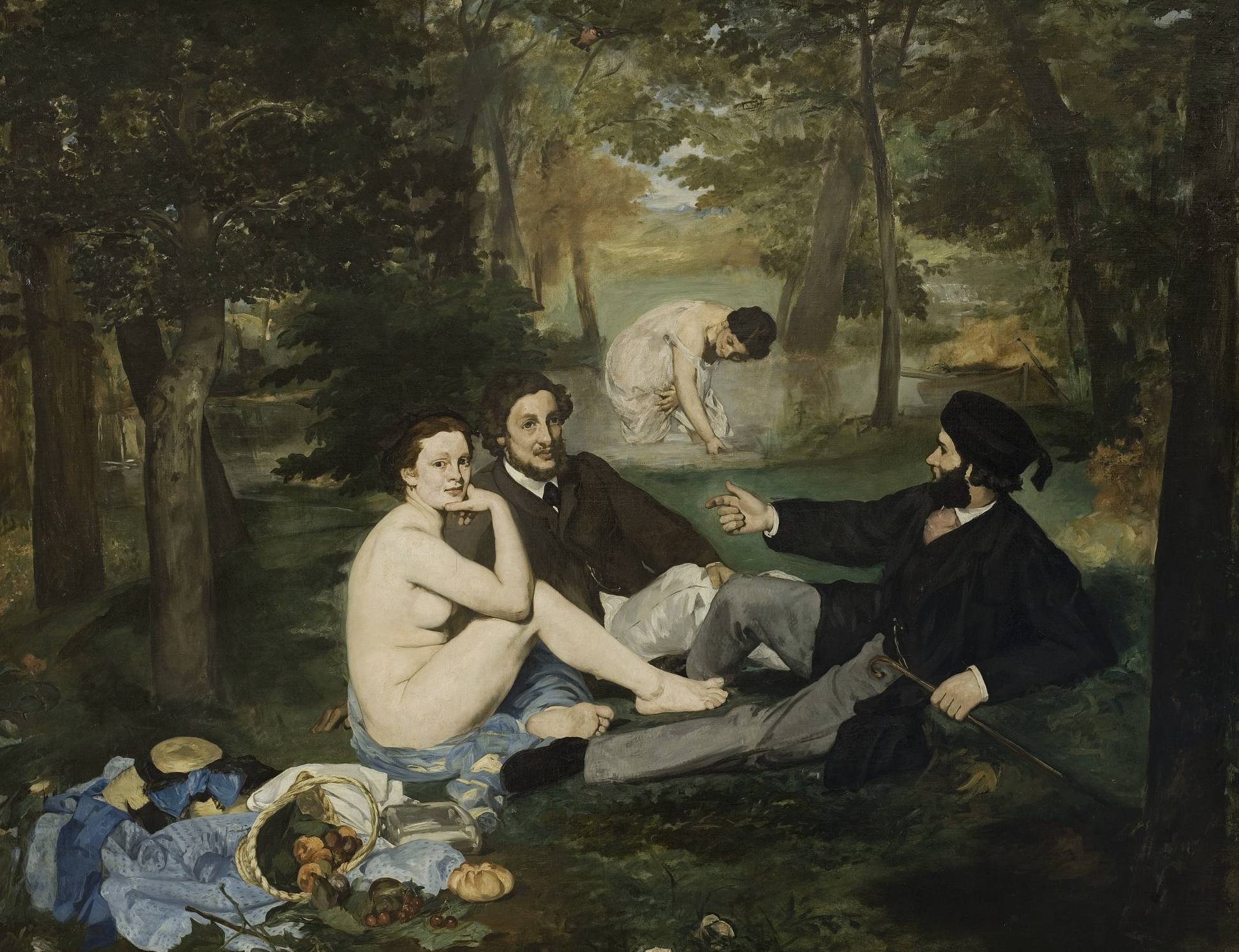
Manet's 'The Luncheon on the Grass'
(1862)

...then once in the garden, and after the Introduction by Niccolo Machiavelli, we will find Emile Zola showing us 'Weeding by Hand', or Sylvia Plath's 'Burying Bulbs in Autumn' …


All delightful examples of comedic commentaries on various great writers' – something for us all to learn from … even using a radiator key – the tool provided to Emily Brontë – when she bled her radiator …


We had a brief overview on this: the
Wilton Diptych (1395 - 1399)


Grab a read … they're delightful parodies … and what a way to appreciate well known authors …


Lots happening out in that global world of ours … enjoy the change of season …


Hilary Melton-Butcher

Positive Letters Inspirational Stories

Thursday, 23 January 2025

Jacqui Murray's Book Blast for her new book - Endangered Species ...

Jacqui of WordDreams is writing these amazing books on the early species of us … and has asked that we contribute various articles on aspects of their life … mine is:

Jacqui - smiling happily


How did they store water?


Essentially they wouldn't have wanted to store it … as they'd have known where to find sources:

... they couldn't live without water;


... by understanding the landscape;

... noting the seasonal swings;

... watching game and birds go to drink;

... they'd have noted the seasonal fruits and herbs ready to eat

... also they'd have realised there were water storing plants which are moisture rich in their flesh or roots …


Nara Melon
For instance the !nara melon (Acanthosicyos horridus) has tap roots penetrating down to water near the water table (not obvious in the landscape).


These ancient inhabitants would have lived in and around an area where there'd have been sufficient resources to support the group, only spreading out when numbers of their group became too many, or they met others and thus Neanderthals spread …


Bushmen drinking from
the bi bulb


They'd have been constantly learning … adding to each generations' brain power as the semi-nomadic peoples lived and learnt.


They'd have lived in caves … where possibly a permanent water supply might have been found … or near a spring line …


Rivers were (and still are) both permanent - or ephemeral – would have been located and noted …

A Bushman drinking from an ostrich egg

They'd have realised that Ostrich eggs could be used for storing/carrying water … these huge very nutritious eggs … would have been invaluable to indigenous groups … they'd learn to create sip-wells ... feeding water into an ostrich egg ... 

Rocky outcrop

There were no straight lines (despite those modern day tyre tracks!) to be followed, or corners cut … they had to find their way each day, otherwise they would not have been able to survive long.


Beef tripe - prepared for filling

When they wanted to travel beyond their normal range … they'd have taken cleaned out intestines and stomachs of animals to hold enough water in case of need … but they'd not require much – those early peoples were very resilient.


Book two of the trilogy
due out in April


Jacqui's email details ... all her wonderful contributors can be found here ...

Word Dreams Book Blast for Endangered Species 


I just congratulate Jacqui - her books are fascinating ... and I so enjoy them - it's great so many of us are promoting her second book in the trilogy ... 

Hilary Melton-Butcher

Positive Letters Inspirational Stories